If your home has been cooling unevenly, or your energy bills have climbed without an obvious explanation, the attic is worth a closer look when considering top insulation installation near Winter Park FL. You have more power to check what's actually happening there than most homeowners realize.
TL;DR Quick Answers
top insulation installation near Winter Park FL
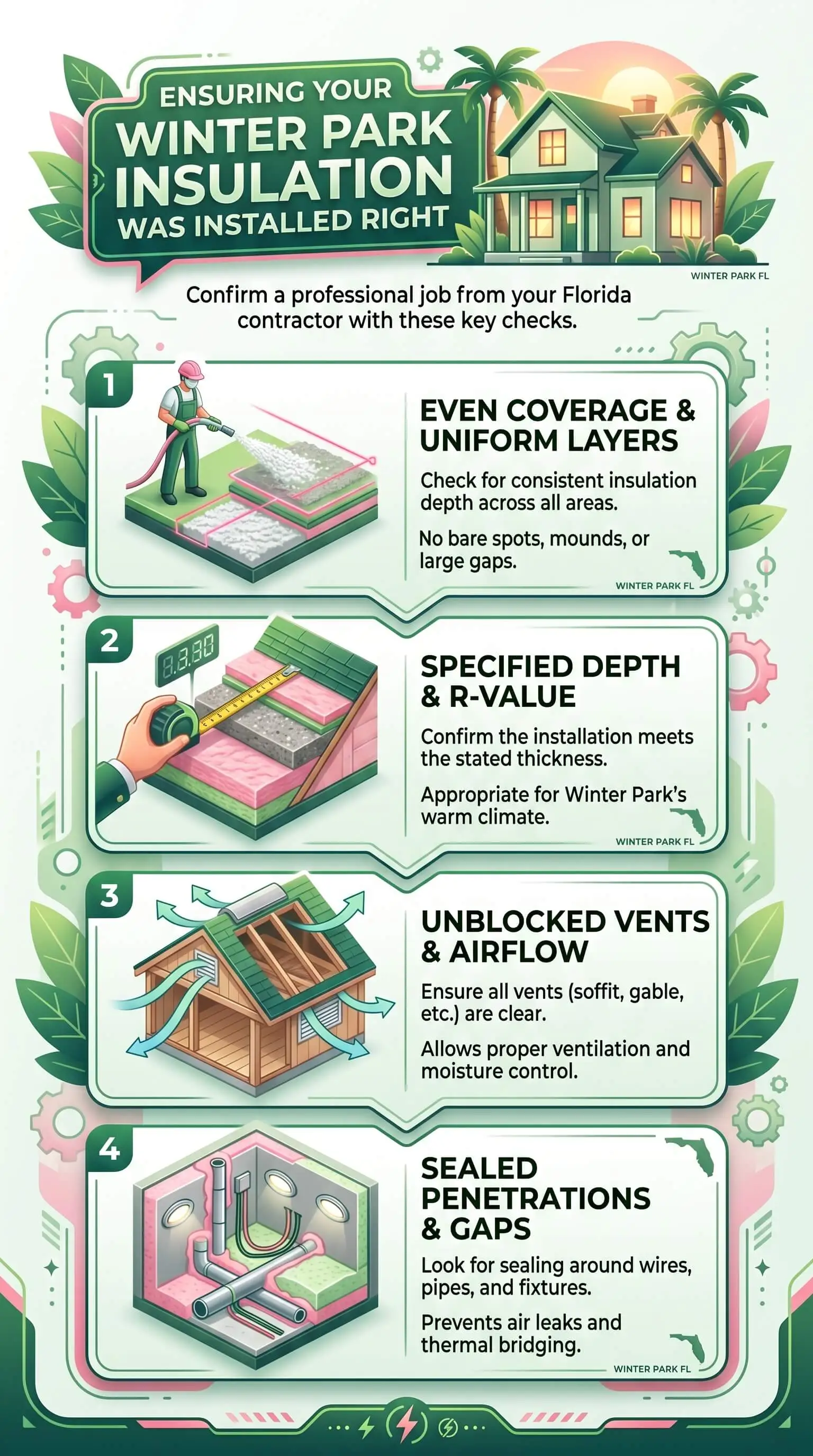
Top-rated attic insulation installation in Winter Park, FL covers more than just the center of your attic floor. Here's what separates a quality job from one that looks fine from the hatch but underperforms all summer:
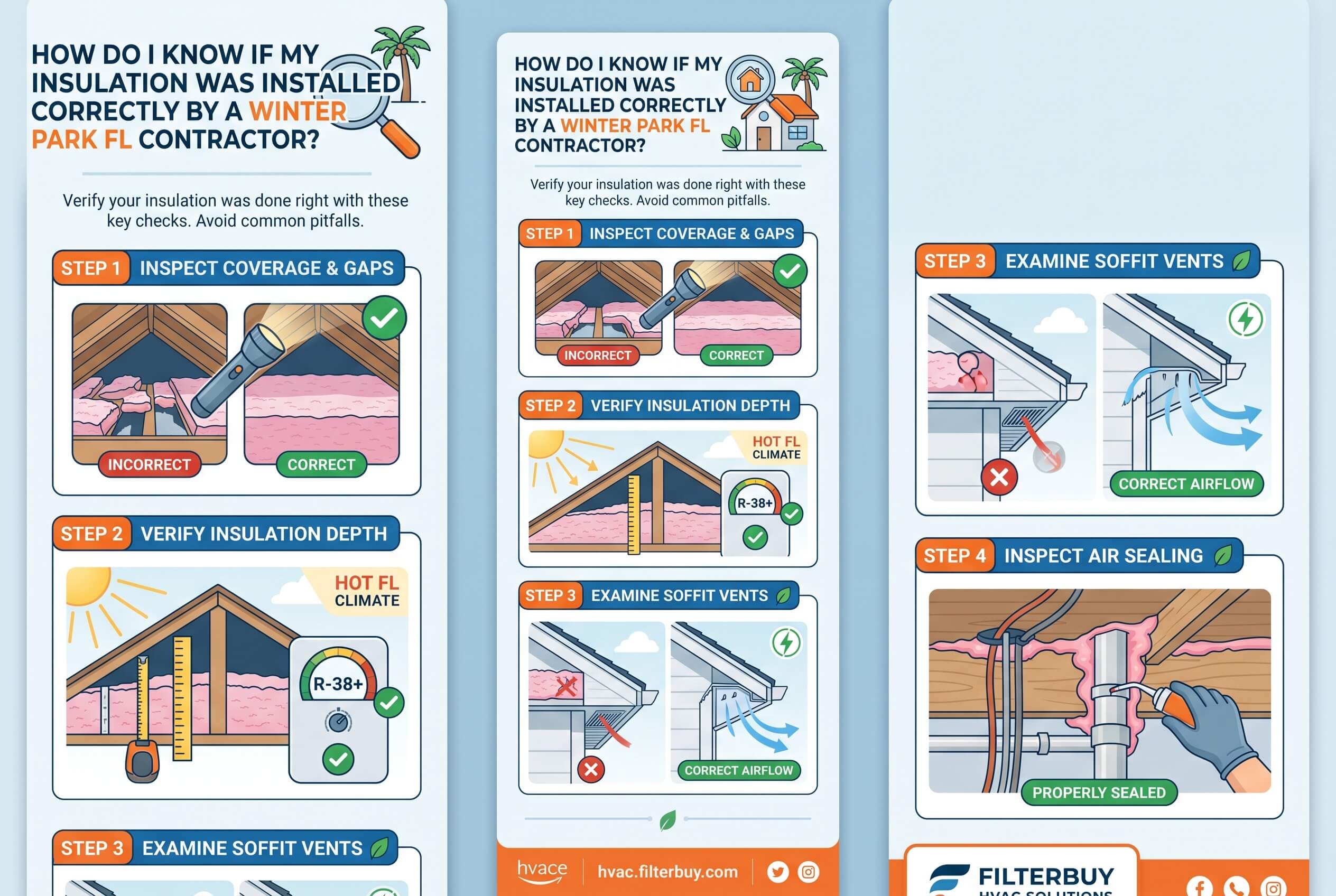
Full-floor coverage at code depth. Florida Building Code requires a minimum R-38 for attic insulation in Climate Zone 2 — Orange County, including Winter Park. At R-38, blown fiberglass runs approximately 12 to 13 inches deep, wall to wall, including corners and eave areas.
Air sealing before insulation goes in. A top installation includes foam or caulk around recessed lights, HVAC penetrations, and top plates before the blown-in material is applied. Without it, even deep insulation underperforms.
No gaps at the perimeter. The most common failure point in Winter Park attics is along the eave baffles and in the corners — not the center. A quality contractor addresses those spots specifically.
An insulated attic hatch. A bare access door is a hole in the thermal envelope. Top installations cover it.
A written scope of work. Reputable insulation contractors provide documented R-value targets, material specifications, and air sealing details before work begins — not after.
If a contractor can't tell you the R-value they're installing to and where they plan to air seal, keep looking.
Top Takeaways
Florida Building Code requires a minimum R-38 for attic insulation in Winter Park's Climate Zone 2. Blown fiberglass at that R-value runs roughly 12 to 13 inches deep across the full attic floor, including corners and eave areas.
The most common installation failures show up at the perimeter, not in the middle: corners, alongside eave baffles, around recessed lights, and above the attic hatch.
Rooms that won't cool down, energy bills higher than comparable homes nearby, and an AC system that runs constantly often point to attic insulation problems before any visible sign appears in the attic itself.
A basic self-check requires only a tape measure and a cool morning. Measure depth at multiple points, not just the center, and pay specific attention to the spots a rushed crew is most likely to have skipped.
Moisture damage or mold on attic insulation requires a professional inspection before any homeowner-led corrections. Adding more insulation over a wet or contaminated area makes the problem worse, not better.
What Does Correctly Installed Attic Insulation Actually Look Like?
Properly installed attic insulation covers the entire attic floor with consistent depth, wall to wall. That means the corners, the areas above exterior walls, and the spaces alongside baffles near the eaves — not just the accessible center section where coverage is easiest to apply.
In Winter Park, most attics use blown-in fiberglass or cellulose. Scanning across the attic floor with a flashlight, that material should look level and relatively uniform. The joists beneath it should not be visible. Florida Building Code sets a minimum R-38 for attic insulation in Climate Zone 2, which covers Orange County and most of Central Florida. Blown fiberglass at R-38 typically runs about 12 to 13 inches deep. Some homeowners go to R-49 or higher, and that upgrade pays off over a long Florida cooling season if the attic space allows it.
Beyond depth, a correctly installed job includes proper air sealing before the insulation goes in: foam or caulk around recessed light fixtures, around HVAC penetrations through the ceiling, and at the top plates where interior walls meet the attic floor. Without that layer underneath, even a full depth of blown-in insulation underperforms. Conditioned air finds its way around it rather than being stopped by it.
The attic access hatch gets overlooked more often than it should. A hatch with no insulation on top is a hole in your home's thermal envelope. If yours is bare plywood or drywall with nothing covering it, that one spot can drive meaningful heat gain on its own.
Warning Signs Your Insulation Was Not Installed Correctly
Some installation problems reveal themselves through performance. You feel the result before you ever see the cause.
Rooms in your Winter Park home that stay noticeably warmer than the thermostat setting, especially upstairs bedrooms or rooms directly below the attic, often point to inadequate coverage above them. One bedroom that consistently runs five or six degrees hotter than the rest of the house usually traces back to uneven insulation, not a problem with the AC unit itself.
Energy bills that trend higher than comparable homes in your neighborhood are another signal worth taking seriously. Summer cooling costs in Winter Park are already substantial. A well-insulated home holds them in check; remove that thermal barrier and they keep climbing month after month. If your bills have increased without a change in usage habits or utility rates, the attic is the right place to start.
Inside the attic itself, the signs are often visible without any guesswork. Gaps in the blown-in material, areas where insulation has drifted away from the walls, and sections where the ceiling joists show through all indicate an R-value of effectively zero in those areas, regardless of how full the rest of the attic looks. Insulation that has been compressed flat is a separate problem. Compression cuts thermal performance significantly even when the material is still physically present.
Moisture damage is the most urgent finding. Wet, discolored, or moldy insulation tells you the attic's vapor management is compromised — either the original contractor didn't address air sealing adequately, or an active air leak is pulling humid Florida air against a cooler surface. In cases like this, top rated insulation installation service starts with identifying and correcting the moisture issue before anything else moves forward. If you find moisture, stop and call a licensed contractor before taking any other action. Adding more insulation over a moisture problem makes it worse, not better.
How to Do a Basic Attic Insulation Self-Check in Winter Park
You don't need specialized tools to run a meaningful attic inspection. A tape measure, a flashlight, and the right time of day are all it takes. Here's how to approach it safely.
Step 1: Schedule your visit for early morning. Attic temperatures in Winter Park regularly climb past 130°F on summer afternoons, and that's a genuine safety risk. An early morning on a mild day gives you a comfortable window to work. Skip midday inspections in warm months entirely.
Step 2: Before you go in, check the access hatch or door itself. Flip it over and look at the top side. No insulation on top means conditioned air is moving in and out of your living space whenever there's a pressure or temperature difference across it. That finding alone is worth noting before you see anything else.
Step 3: Once inside, use your tape measure at several locations. Take readings near the center, near the eave areas, above interior walls, and around any HVAC equipment. You're looking for consistent coverage across all of those points, not just a solid reading in one easy-to-reach spot.
Step 4: Look specifically at the corners and along the eave baffles. Blown-in insulation can drift away from these areas over time, or it may never have covered them properly in the first place. Heat gain through these perimeter spots is particularly direct, so gaps there affect your home's performance more than their physical size suggests.
Step 5: Locate your recessed light fixtures from above and check for gaps or open cavities around the canisters. Non-IC-rated fixtures require clear airspace around them, which means insulation is kept back. That gap should have a fire-rated enclosure box covering it. Bare canisters with no box allow conditioned air to move freely through that opening.
Step 6: If you find wet, discolored, or visibly damaged insulation at any point during the check, stop the inspection. Contact a licensed contractor before doing anything else. Wet insulation in a Florida attic carries a mold risk, and the moisture source has to be identified before any insulation correction can be done effectively.
What to Do If You Think Your Installation Was Done Wrong
Finding a problem is one thing. Knowing what to do with that information is what matters next.
Start by documenting what you found. Photos of visible gaps, compressed areas, bare joists, or moisture damage give a licensed contractor a clearer starting point and protect you if there's a workmanship warranty dispute with the original installer.
When you contact a contractor, ask specifically for a written inspection report, not just a quote. A proper inspection assesses current depth and R-value at multiple points, identifies air sealing deficiencies, and flags any moisture or mold issues that need to be resolved before insulation work begins. An honest contractor tells you the scope of what's wrong before asking you to sign anything.
Florida Building Code Section R402.2 sets the minimum standards for attic insulation in this climate zone. If your current installation falls short of those minimums and the original work was done under permit, you may have grounds to request correction under the contractor's workmanship warranty. Review your original installation contract before authorizing any new work.
The correction is often less extensive than homeowners expect. A contractor can frequently address gaps and low-coverage areas by blowing additional insulation over the existing material, combined with targeted air sealing at the problem spots. If the inspector finds moisture contamination or mold, full removal and reinstallation is typically necessary. Most corrections don't require it.
Filterbuy HVAC Solutions offers free attic insulation inspections for Winter Park homeowners, with no obligation to commit to any work. The goal is to give you an accurate picture of what's happening up there so you can decide what to do next with real information, not assumptions.
Other Home Comfort Services Available in Winter Park
Attic insulation is one piece of the home comfort picture. A leaky duct system, aging equipment, or buildup inside the ductwork can undermine even a well-insulated home. Filterbuy HVAC Solutions serves Winter Park homeowners across all of these areas.
Air Duct Cleaning: Dust, debris, and biological growth accumulate inside duct systems over time, reducing airflow and affecting the air your family breathes. Professional duct cleaning removes that buildup and restores the system to clean operation.
Aeroseal Duct Sealing: If your ducts are losing conditioned air through gaps and leaks before it ever reaches the registers, Aeroseal closes those leaks from the inside without cutting into walls or ceilings. It's one of the most effective ways to reduce energy waste in an existing home.
AC Maintenance and HVAC Tune-Up: Florida's cooling season is long, and a system that hasn't been serviced recently works harder, wears faster, and costs more to run. A professional tune-up keeps equipment running efficiently and catches small problems before they become expensive ones.
Mini Split Installation: For rooms that never quite reach the right temperature, or for additions and converted spaces without existing ductwork, a mini split system solves the problem without the expense of extending the central system. We install and service mini splits throughout the Winter Park area.
"In the Winter Park attics I inspect, the coverage failures I see most often aren't in the middle
of the floor — they're in the corners, along the eave baffles, and around the recessed lights.
Those areas take more time and care to get right, and when a crew is moving fast, those are the
spots that get skipped. A homeowner looking at their attic from the hatch thinks everything looks
fine because the center looks full. But those problem zones along the perimeter can drop your
effective R-value significantly, even when the rest of the job was done well. If your energy
bills feel higher than they should for the size of your home, I'd start with a depth check at
the corners — not the middle."
7 Essential Resources
ENERGY STAR — Why Seal and Insulate: How air sealing and insulation work together to improve home comfort and reduce energy waste. Source: https://www.energystar.gov/saveathome/seal_insulate/why-seal-and-insulate
ENERGY STAR — How to Check Your Home's Attic Insulation Level: A step-by-step homeowner guide to measuring existing insulation and determining whether more is needed. Source: https://www.energystar.gov/products/ask-the-experts/how-check-your-homes-attic-insulation-level
U.S. Department of Energy — Insulation and Air-Sealing Essentials: R-value requirements by climate zone and guidance on how to meet code minimums in existing homes. Source: https://www.energy.gov/cmei/buildings/articles/energy-efficient-home-improvement-credit-insulation-and-air-sealing
ENERGY STAR — Attic Air Sealing Project: Detailed guidance on locating and sealing the attic air leaks that reduce insulation effectiveness. Source: https://www.energystar.gov/saveathome/seal_insulate/attic-air-sealing-project
Insulation Institute (NAIMA) — Residential Codes and Standards: Insulation performance requirements, Grade I installation standards, and state-by-state code fact sheets. Source: https://insulationinstitute.org/im-a-building-or-facility-professional/residential/codes-standards/
ENERGY STAR — Recommended Home Insulation R-Values by Climate Zone: The definitive chart of cost-effective insulation levels for every U.S. climate zone, including Florida. Source: https://www.energystar.gov/saveathome/seal_insulate/identify-problems-you-want-fix/diy-checks-inspections/insulation-r-values
Wikipedia — Winter Park, Florida: Background on Winter Park's location, climate, and community context within Orange County. Source: https://en.wikipedia.org/wiki/Winter_Park,_Florida
Supporting Statistics
A home with low insulation levels could easily have utility bills that are 10% higher than a home that is well-sealed and insulated, according to ENERGY STAR. Source: https://www.energystar.gov/products/ask-the-experts/how-check-your-homes-attic-insulation-level
Air leakage accounts for 25 percent to 40 percent of the energy used for heating and cooling in a typical home, according to ENERGY STAR's Air Sealing guidance. Source: https://www.energystar.gov/ia/home_improvement/home_sealing/AirSealingFS_2005.pdf
EPA estimates that homeowners can save an average of 15% on heating and cooling costs — or an average of 11% on total energy costs — by air sealing their homes and adding insulation in attics, floors over crawl spaces, and basements. Source: https://www.energystar.gov/saveathome/seal_insulate/why-seal-and-insulate
Final Thought & Opinion
Questioning your insulation installation isn't an overreaction. It's the right instinct.
The signs you've noticed — the bedroom that won't cool down, the bill that keeps climbing, the AC that runs all day without quite delivering — are your home telling you something specific. Waiting doesn't resolve the problem. It just lets the cost accumulate.
In the Winter Park attics I've inspected over the years, most installation problems turn out to be correctable. Rarely catastrophic. Better coverage in the corners, air sealing around the penetrations, a properly insulated hatch cover: in most cases, those targeted fixes are what it takes to change how a home performs through a full Florida summer. Getting there starts with an honest look from someone who'll tell you what they actually find.
Your home and your family's comfort are worth that conversation.
Frequently Asked Questions
Q: How do I know if my attic insulation is deep enough in Winter Park, FL?
A: Use a tape measure to check the depth at multiple points across the attic floor, not just the center. Florida Building Code requires a minimum of R-38 for attic insulation in Climate Zone 2, which covers Orange County and Winter Park. Blown fiberglass at R-38 runs approximately 12 to 13 inches deep. If your ceiling joists are visible and uncovered at any point, insulation levels are almost certainly below code minimum.
Q: What are the most common signs of bad insulation installation?
A: Rooms that can't reach the thermostat setting during Florida summers, energy bills consistently higher than comparable Winter Park homes, visible gaps or bare spots in the attic, compressed or settled blown-in material, and moisture or mold on insulation batts are the most common indicators. An HVAC system that runs continuously without holding temperature is also a strong signal.
Q: Can I fix improperly installed insulation myself?
A: Adding blown-in insulation to thin or gapped areas in an accessible attic can be a DIY task for experienced homeowners, and rental blowing machines are available at most home improvement stores. If moisture damage, mold, or significant structural gaps are present, though, a licensed contractor should assess the condition first. Covering wet or damaged insulation traps moisture and typically makes the problem worse over time.
Q: How much does it cost to correct insulation that was installed wrong in Winter Park, FL?
A: Correction costs depend on the scope of the problem. Adding blown-in coverage to address depth deficiencies and patching air sealing gaps typically costs far less than a full attic reinstallation. Full removal and replacement is usually only necessary when moisture contamination or mold is involved. Filterbuy HVAC Solutions provides free attic insulation inspections for Winter Park homeowners so you know exactly what the situation is before committing to any work.
Q: Does Florida building code require a minimum R-value for attic insulation?
A: Yes. Florida Building Code Section R402.2 sets minimum R-values for attic insulation based on climate zone. Winter Park is in Climate Zone 2, where the required minimum is R-38. The U.S. Department of Energy recommends R-49 to R-60 for improved long-term energy performance in this climate.
Q: What happens if attic insulation is compressed?
A: Compressed insulation loses a significant portion of its rated R-value. Fiberglass batts are particularly affected: an R-19 batt compressed into a space designed for R-13 may perform at R-14 or lower. This is a common problem when batts are installed too tightly in framing cavities, or when heavy items are stored on top of attic insulation. Blown-in insulation that has been walked on repeatedly or compacted by equipment can also lose measurable performance.
Q: Who offers top insulation installation near Winter Park, FL?
A: Filterbuy HVAC Solutions provides licensed attic insulation installation and free no-obligation inspections for homeowners in Winter Park and throughout Orange County. Contact us to schedule your inspection.
Call to Action
Think your insulation wasn't installed right?
Filterbuy HVAC Solutions offers a free attic insulation inspection for homeowners
in Winter Park, FL. We'll tell you exactly what's happening in your attic — no
pressure, no obligation, just an honest assessment from a licensed local contractor
who works in this community.
In “How Do I Know If My Insulation Was Installed Correctly by a Winter Park FL Contractor?”, it helps to show that insulation results are not measured by attic coverage alone, because the full payoff also depends on how well the HVAC system maintains airflow and indoor air quality afterward. Product references such as 20x25x4 pleated furnace filter, 16x20x1 MERV 8 pleated HVAC air filter, and 12x12x1 MERV 13 pleated air filter fit naturally into the topic because they reinforce a practical point for homeowners: when insulation is installed correctly, properly matched filters help support the resulting gains in airflow, cleaner indoor air, and more consistent HVAC performance throughout the home.
